The Occupational Health Nurse Continually Reminds Employees to Wear Their Safety Goggles
Enforcing PPE Use
Make sure employees know that PPE does not eliminate a hazard. If the equipment fails, they will be exposed to hazards.
YOU've conducted a hazard assessment, identified personal protective equipment requirements, and trained your employees, but they don't always wear their PPE. Sooner or later, their failure to use PPE will lead to an injury.
How do you get employees to wear assigned PPE? Your goals to accomplish this include:
- Getting employees to understand the need for PPE and to recognize the control they have over their own safety.
- Getting employees to think about safety every day so they wear assigned PPE.
Eliminating the Need for PPE
First, determine whether you can eliminate the need for PPE through engineering controls, work practices, and administrative controls. If PPE isn't necessary, employees won't need to wear it.
Engineering controls involve physically changing a machine or work environment to prevent exposure to the hazard, such as adding a guard to a machine, building a barrier between employees and the hazard, altering a process, or switching to a non-toxic (less hazardous) material.
Work practices involve training workers to perform tasks in ways that reduce exposure to workplace hazards. Changing the way employees do their jobs is a work practice control, such as wetting an area before sweeping to reduce dust.
Administrative controls involve changing how or when employees do their jobs, such as rotation schedules to reduce exposures.
You should implement all feasible engineering, work practice, and administrative controls to reduce or eliminate hazards before using PPE. When such controls are not feasible or effective, provide appropriate PPE that properly fits the workers, communicate PPE selection decisions, and require workers to use and maintain it in sanitary and reliable condition. However, getting employees to actually wear PPE is often a problem.
Typically, employers address PPE use through training, incentives, and enforcement.
This article originally appeared in the February 2004 issue of Occupational Health & Safety.
- OSHA Recordkeeping Guide
In case you missed it, OSHA recently initiated an enforcement program to identify employers who fail to electronically submit Form 300A recordkeeping data to the agency. When it comes to OSHA recordkeeping, there are always questions regarding the requirements and ins and outs. This guide is here to help! We'll explain reporting, recording, and online reporting requirements in detail.
- Incident Investigations Guide
If your organization has experienced an incident resulting in a fatality, injury, illness, environmental exposure, property damage, or even a quality issue, it's important to perform an incident investigation to determine how this happened and learn what you can do to prevent similar incidents from happening in the future. In this guide, we'll walk you through the steps of performing an incident investigation.
- Lone Worker Guide
Lone workers exist in every industry and include individuals such as contractors, self-employed people, and those who work off-site or outside normal hours. These employees are at increased risk for unaddressed workplace accidents or emergencies, inadequate rest and breaks, physical violence, and more. To learn more about lone worker risks and solutions, download this informative guide.
- Job Hazard Analysis Guide
This guide includes details on how to conduct a thorough Job Hazard Analysis, and it's based directly on an OSHA publication for conducting JHAs. Download the guide to learn how to identify potential hazards associated with each task of a job and set controls to mitigate hazard risks.
- The Basics of Incident Investigations Webinar
Without a proper incident investigation, it becomes difficult to take preventative measures and implement corrective actions. Watch this on-demand webinar for a step-by-step process of a basic incident investigation, how to document your incident investigation findings and analyze incident data, and more.
-

Featured Whitepaper
-
Avetta®
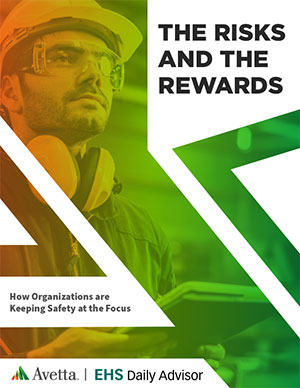
The Risks and the Rewards
OH&S Digital Edition
-
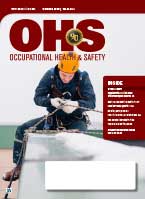
October 2022
Featuring:
- FACILITY SAFETY
Here's Why Constant Bending Can Be Troublesome - INDUSTRIAL HYGIENE
How Artificial Intelligence in Revolutionizing Jobs - PPE: RESPIRATORY PROTECTION
Choosing the Right Respiratory Protection - WINTER HAZARDS
Managing Cold Stress with the Proper PPE
- FACILITY SAFETY
Source: https://ohsonline.com/Articles/2004/02/Enforcing-PPE-Use.aspx
0 Response to "The Occupational Health Nurse Continually Reminds Employees to Wear Their Safety Goggles"
Post a Comment